
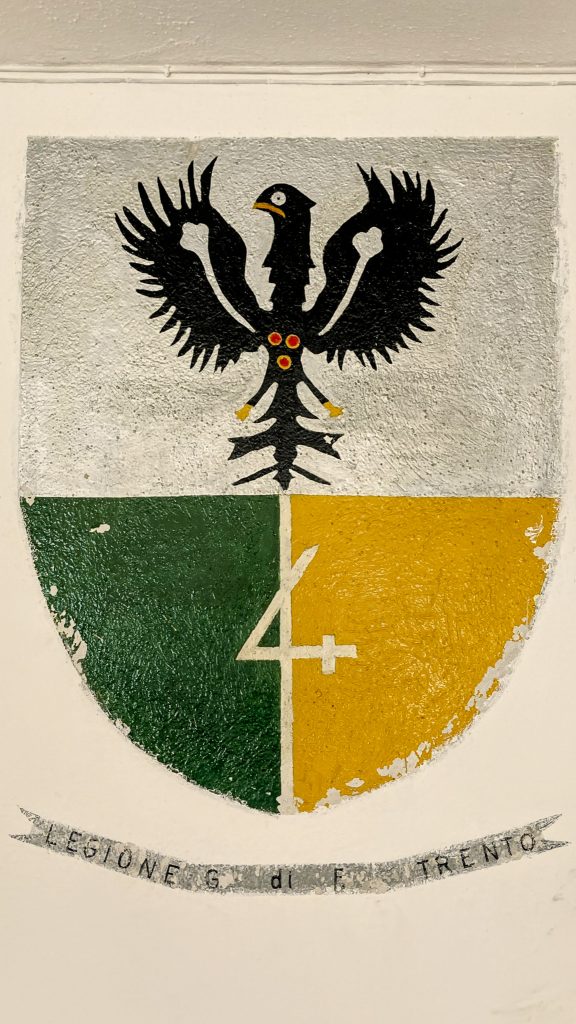
Eagle Crest
The Eagle of the Financial Barracks on the first floor, this eagle crest was once painted directly onto the wall of the former mess hall of the financial barracks. Where there is now a guest room, finance officers once sat down to eat. The mural was part of the room — long before travelers began coming and going.
Today, only the head of the eagle remains. A door was later installed at this very spot, and the rest disappeared. What remains is the story — and the memory that the FinKa was once a financial barracks. Anyone sleeping in this room today might take a moment to wonder under whose gaze people once sat and ate here.
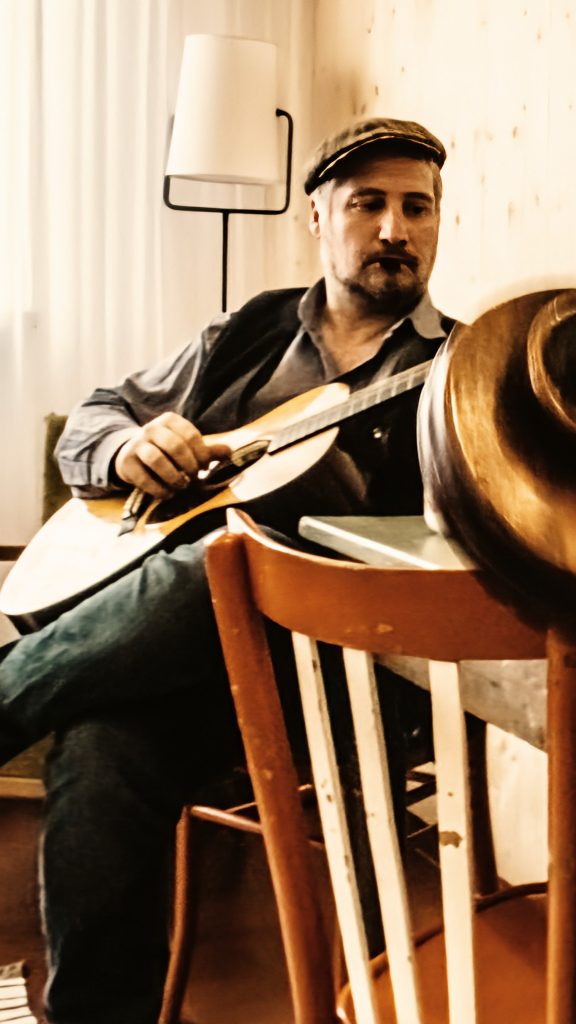
Songwriter
Here sits Dominik Plangger in the FinKa’s self-catering kitchen, guitar in hand, somewhere between everyday life and music. Singer-songwriter, regular guest, co-organiser, and a constant presence at the FinKa Festival. He has played many living room concerts here together with his wife, Claudia Fenzl, evenings that were often so intense that even the old barracks walls seemed to forget what they were once built for. And yes, he is my younger brother. Younger only in family order. On stage, he has long become a significant songwriter in the German-speaking world. The fact that he plays at the FinKa Festival every year is therefore less about planning and more about habit – or simply family, with a professional standard.
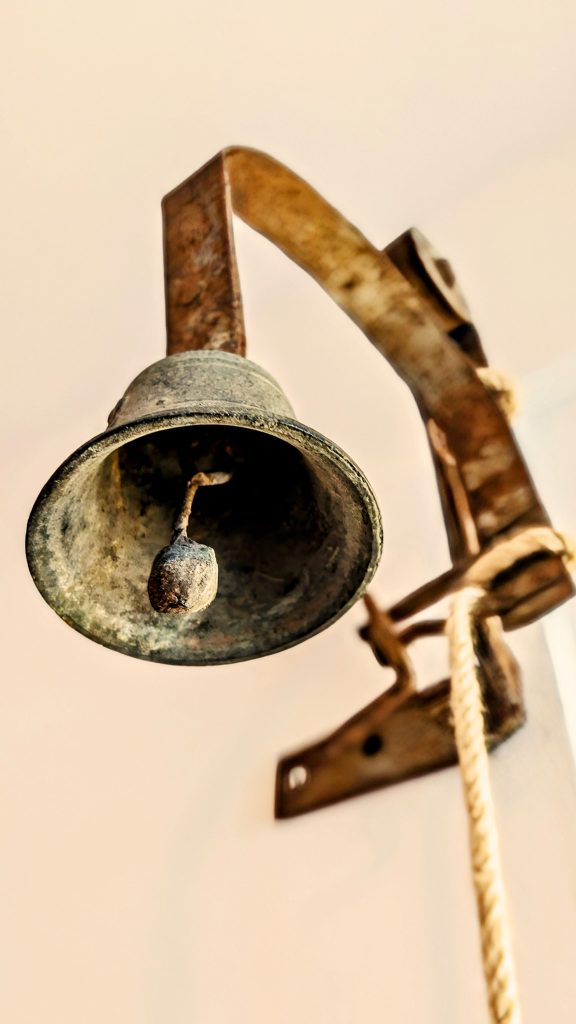
Reception bell
This bell hangs in front of the reception, right next to the door. When you arrive, you pull it – a friendly but clear way to call us for check-in. No digital sound, no display, no system in the background. Just a simple pull on the rope. The bell is a found object, discovered somewhere, brought here, and put back into use. It does exactly what it was made for, nothing more, nothing less. And every time it rings, it reminds us that hospitality sometimes begins in the simplest way – with a sound that says: someone has arrived.
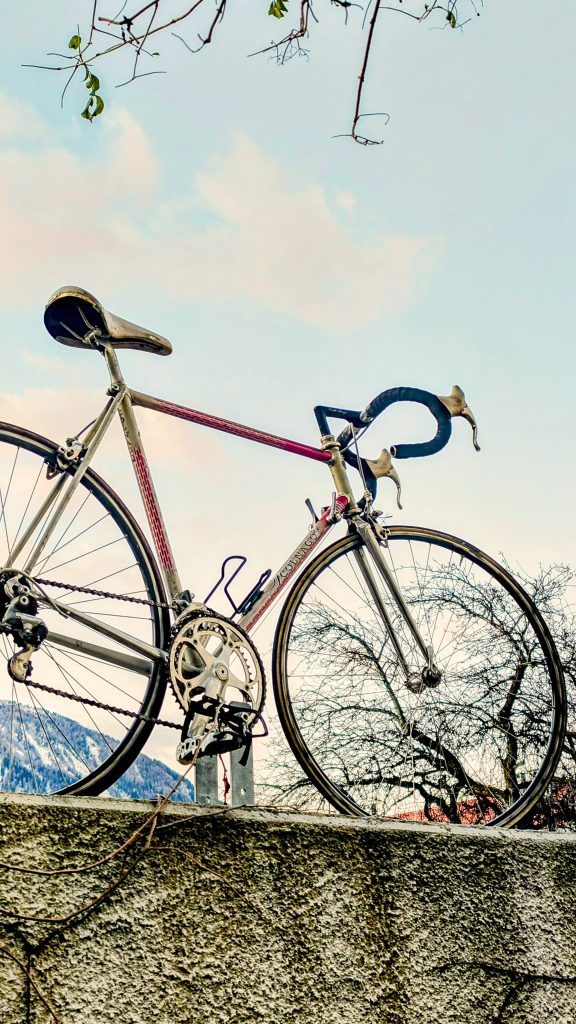
Colnago
This used to be my bike. Now it stands in the garden, resting on the wall, looking out over the Val Venosta. Back then, it was always on the move, across the roads of the region, up to the Stelvio Pass and back again. Many kilometres, many climbs, a lot that stayed. The frame is light, the traces are not. You can see it was ridden, not preserved. It was never meant to be on display, always part of movement. Now it stands still, almost too quiet for what it once was. And yet, it fits perfectly here. Not as decoration, but as a reminder. Probably one of a kind, not because of the brand, but because of the roads it carries within.
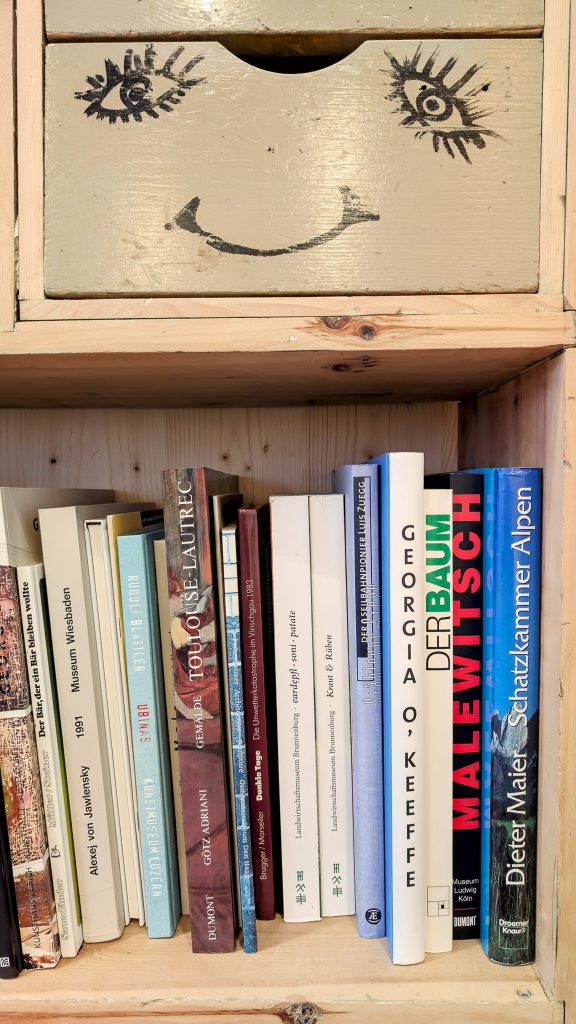
Bookshelf
This bookshelf stands in the Salone, our shared living space. Where it originally came from is no longer entirely clear. The drawers still carry traces of their former purpose, and some labels suggest it once belonged to a workshop. Maybe someone tried to keep things in order here. Maybe not very successfully. At some point, the face appeared, simply drawn onto one of the drawers. Two eyes, a smile, nothing complex – but just right. Today it holds travel guides, novels, and books about the mountains. And in between, this small detail that reminds you that not everything has to be perfect. Sometimes it’s enough to have a piece of furniture that quietly smiles back.
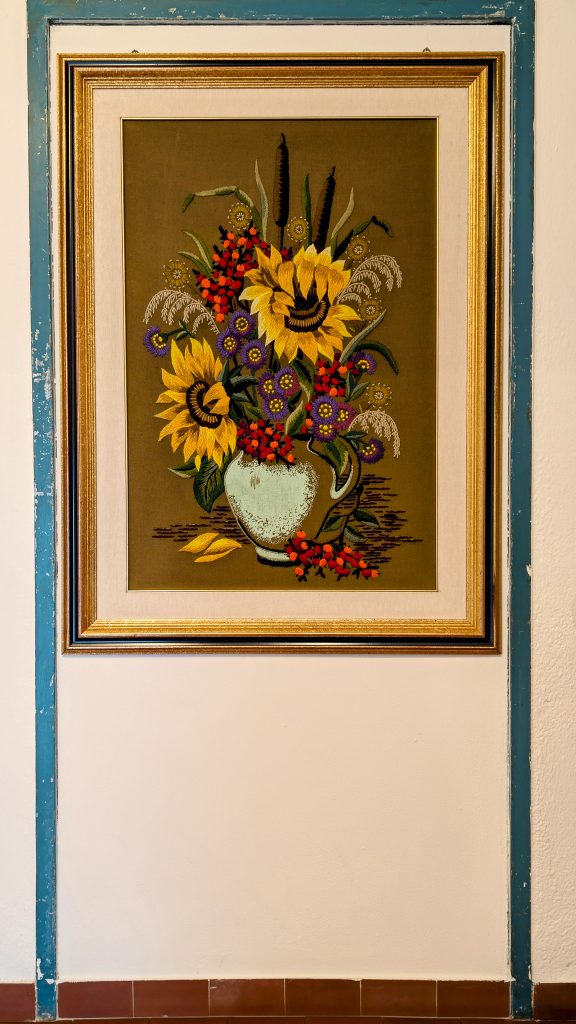
The painting
Probably not a Van Gogh. But a still life that works perfectly well without a famous name. Sunflowers, bold colors, a familiar motif that somehow never gets old. We didn’t hang it here by chance, but placed it exactly in this spot. Because this used to be a passage. The turquoise frame around it isn’t a picture frame, but a former doorway. It once led into another room, today it leads into the image. What used to be a transition has become a view. Old architecture meets a new perspective, without trying too hard. Sometimes that’s all it takes: not a big context, just the right place.
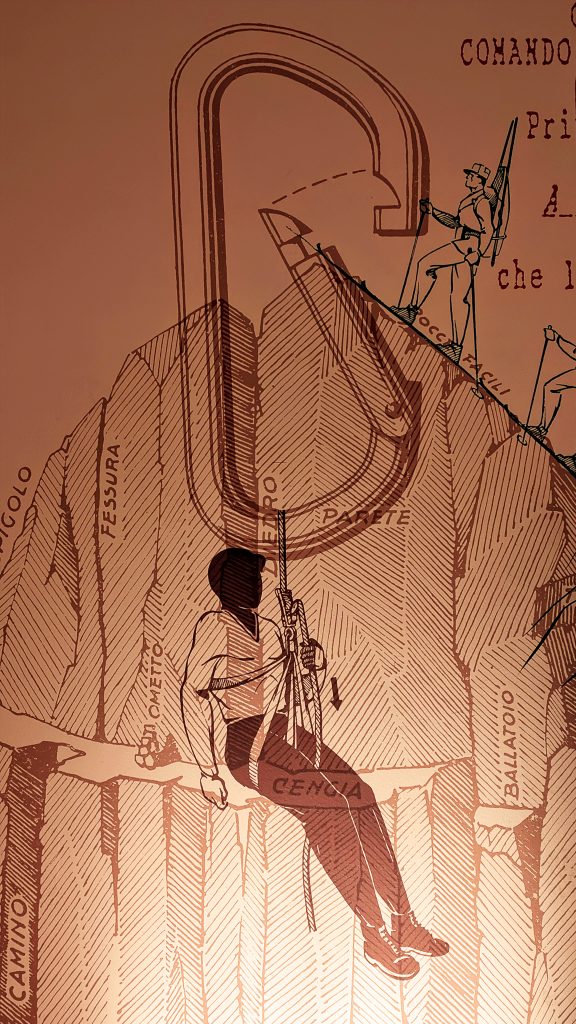
Alpinismo
This wall graphic in the entrance area of the FinKa is no random design. The drawings and symbols come from a book we found in the building – a manual for finance officers. It was issued to them at the time and contained no stories, only instructions: how to move in the mountains, how to navigate in snow, how to survive. Their work took place high up, in terrain that allows little room for error. They controlled smuggling routes, often under conditions closer to mountaineering than administration. The book was therefore precise, functional, reduced to what mattered. Today, its pages are enlarged and displayed on our wall. What was once a manual for survival in the mountains has become a quiet image in the entrance area – and a reminder of what this place once was.
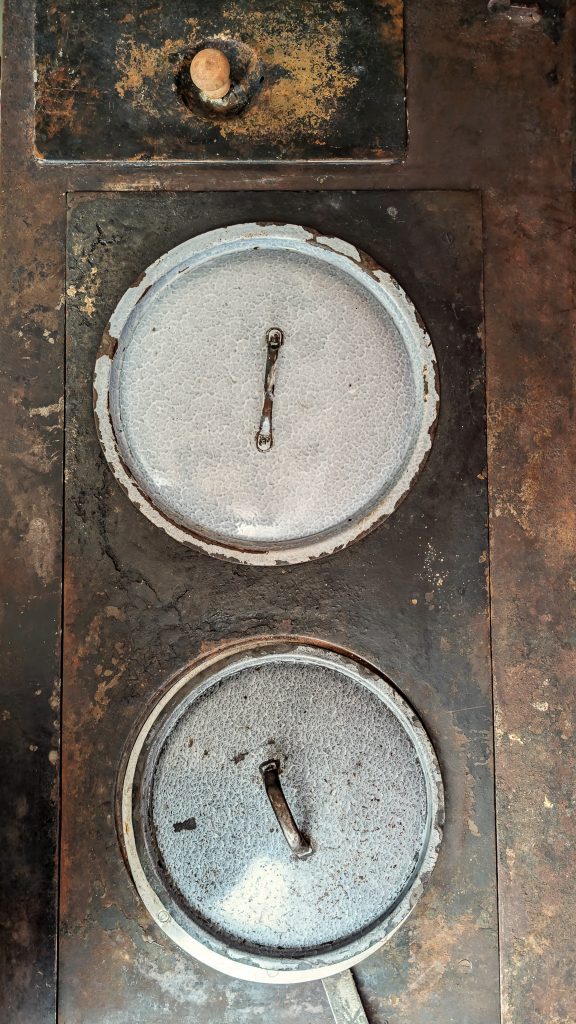
The Stove
I received this stove as a gift from a good friend. Over a hundred years old, built at a time when cooking and war existed side by side. These stoves stood in farmhouses, but also at the front lines. An everyday object in an era that was anything but ordinary. You can still see it: the material, the marks, the quiet presence it carries today. It once belonged to something loud and urgent. Now it stands still. It has found its place in our self-catering kitchen, no longer in use. For transport, we had to remove the heavy firebricks inside, otherwise we wouldn’t have moved it at all. It no longer cooks. But it tells stories. And sometimes that matters more.
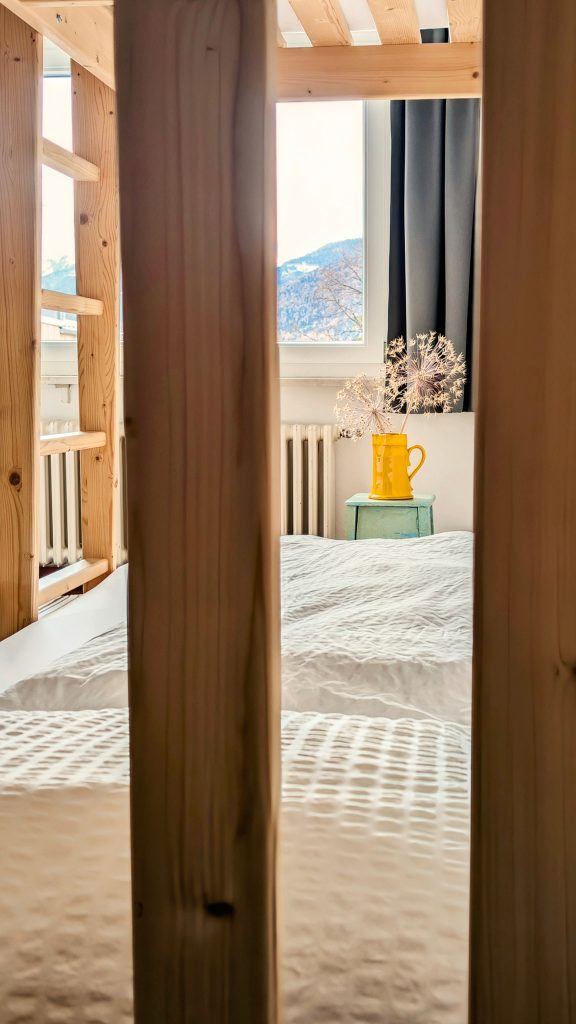
South-facing room
A view through the wooden bunk beds, looking out towards the Ortler mountains. The room doesn’t reveal itself all at once, but in layers – bed, light, window, landscape. In between, simple things: a small table, a jug, a few dried plants. Nothing stands out, everything just belongs. The light enters softly and changes the room almost unnoticed throughout the day. The interior remains restrained, clear and functional, but never cold. It’s a kind of calm that isn’t staged, but simply there.
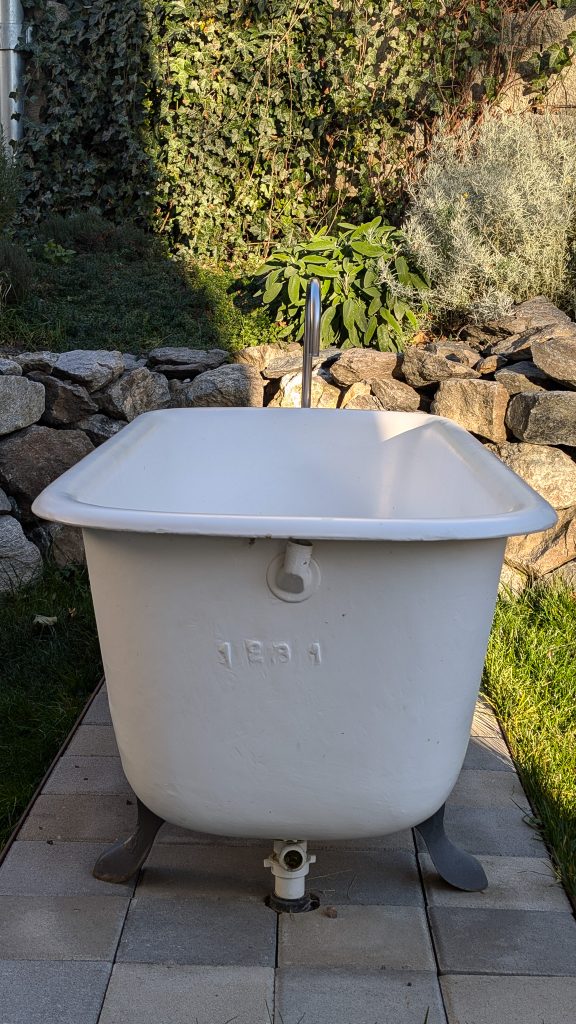
Wellness area
This is the FinKa’s wellness area. Our only bathtub – and it’s outside. No dimmed lights, no scented candles, no soft music in the background. Instead: fresh air, a bit of weather, and water that is rarely the perfect temperature. In summer, it becomes a spontaneous way to cool down. Especially for kids, who don’t need much explanation. Just get in. In winter, it gets more interesting. Then it stands there like an invitation you shouldn’t overthink. Ice bathing included. Anyone stepping in doesn’t do it for comfort, but out of conviction – or curiosity. No stars, no spa labels. But maybe closer to what you actually need.
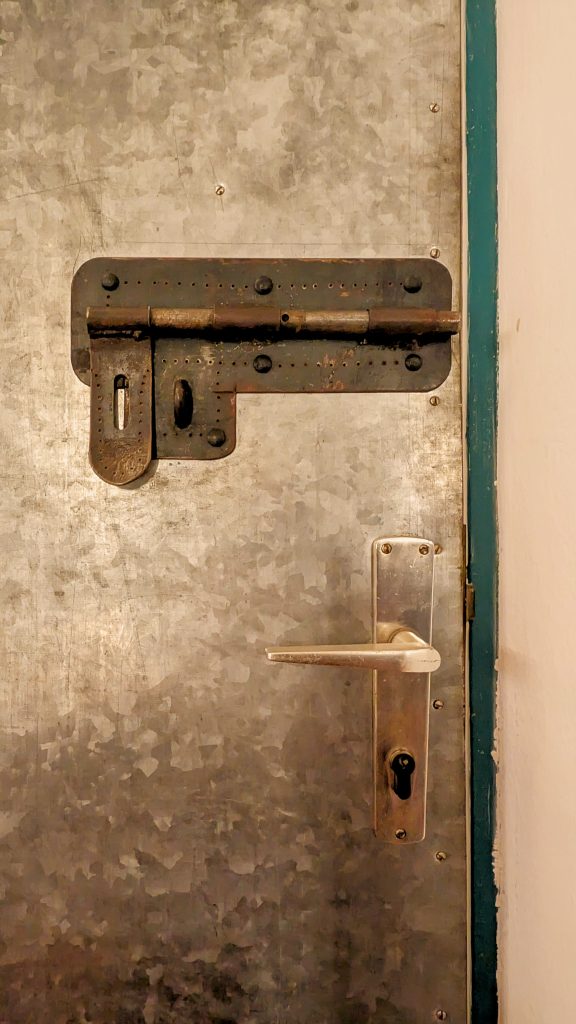
Prison Door
This door dates back to the time when the FinKa was still a finance barracks. On the lower floor, where guest rooms are today, there used to be a holding cell. Not a place for long conversations – more a place for clear decisions. The door reflects that: heavy, functional, with no intention of being welcoming. Metal on metal, a latch not designed for doubt. If you were inside, you stayed there until someone on the outside decided otherwise. Today, it stands in the Spaccio, right in the dining room. Where there was once just an opening, we placed it. People walk through it without stopping. Without a key. Without thinking about what it once was. And maybe that’s the difference: The door is still the same. Only what it separates has changed.
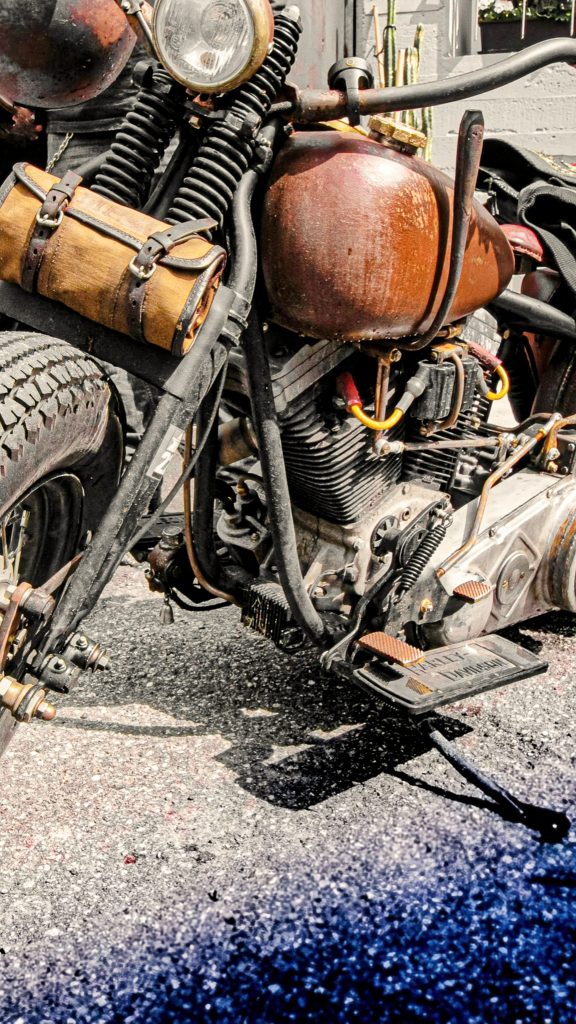
Harley
ome arrive at the FinKa on foot. Others on two wheels – and still decide to stay. This old Harley has seen more roads than most maps can show. Dust, oil, time – all there, nothing hidden. For a brief moment, it stood still with us. Almost unusual. Because machines like this aren’t made for standing still. They’re made to keep going.
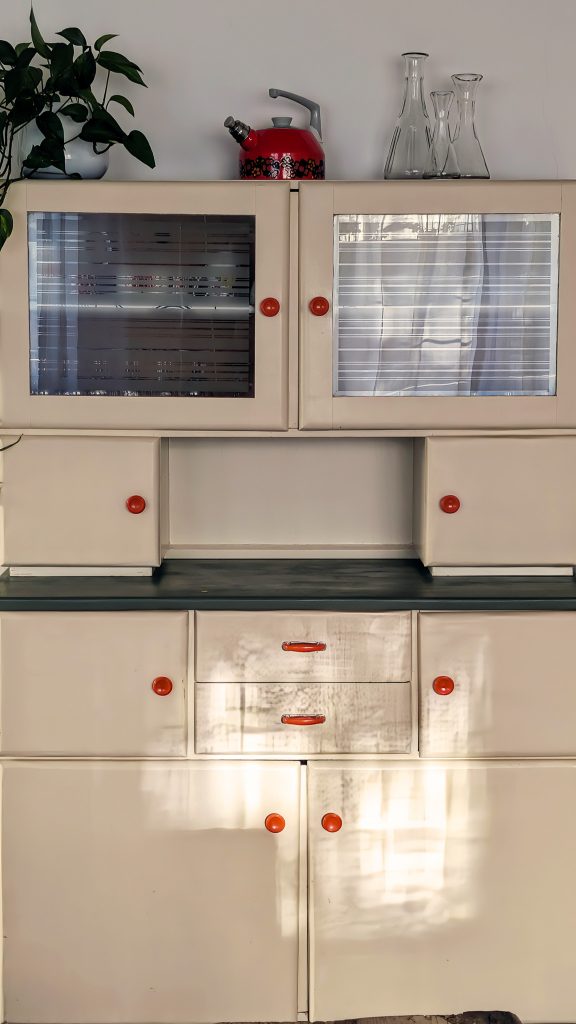
Credenza
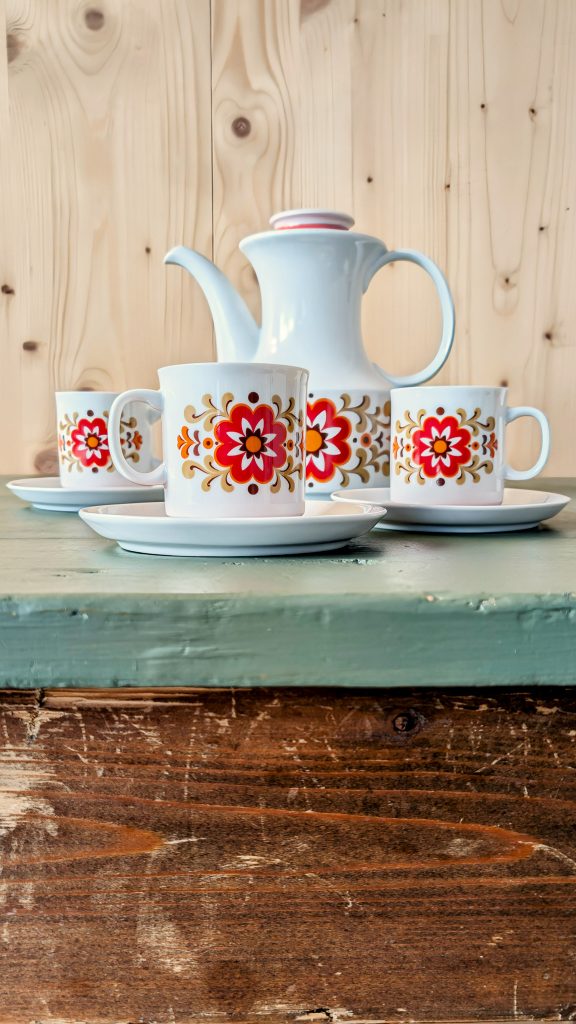
The cupboard from a second life – now in the front row. It probably once stood in an ordinary kitchen, somewhere between Sunday soup and a radio playing in the background. Today it stands in the FinKa, holding what it always has: glasses, cutlery, a bit of order – and quite a lot of history. Found during a clear-out, stripped of its old paint, repainted, put back together. The red handles stayed – luckily. They’re something like its wink.
Anyone taking a cup from this cupboard isn’t just grabbing tableware. They’re touching a piece of furniture that has seen more kitchens than most of our guests ever will.

