
Dumpling Philosophy at FinKa Hostel: Authentic Upper Val Venosta Dumplings

The history of dumplings – from Hocheppan to the FinKa
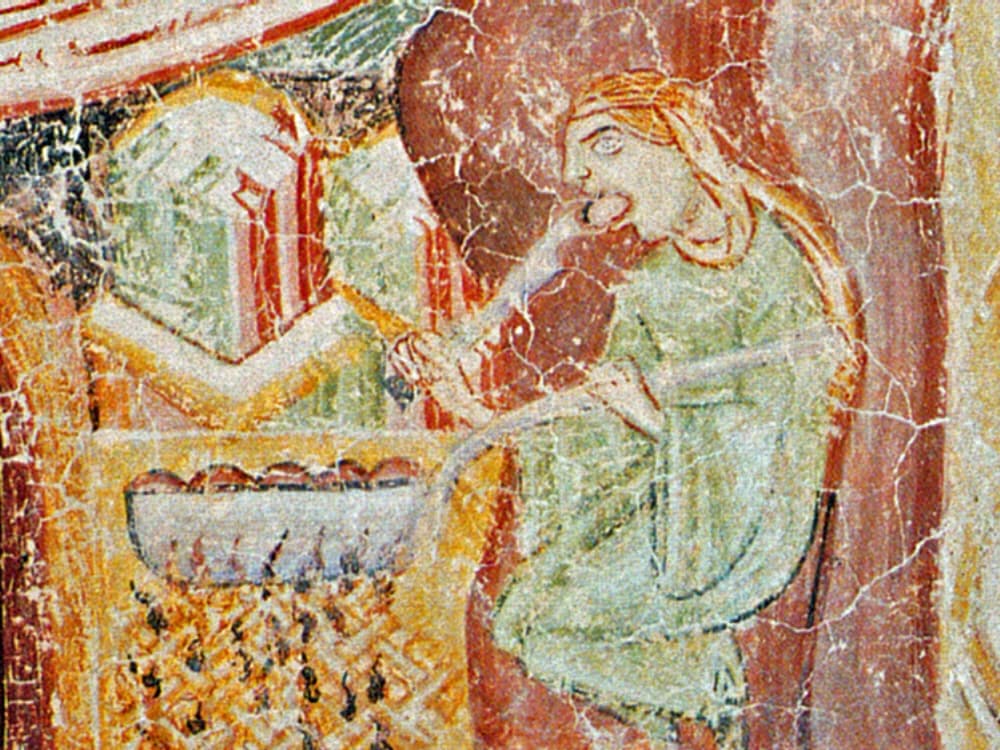
The oldest known depiction of South Tyrol’s most famous traditional dish can be found in a cycle of frescoes dating back to around 1200 in the small castle chapel of Hocheppan. Among biblical scenes, such as the birth of Christ, there is a woman – the so-called “dumpling eater” – shown taking a dumpling from a large pot over an open fire and tasting it. And so, the dumpling eater became an iconic figure, a legend, and the unofficial patron saint of all those who shape dumplings with the same devotion.
Especially on farms, where people were largely self-sufficient, dumplings played a central role. Bread, milk, cheese, bacon, and eggs—all of it came from the farm itself. The dumpling was the perfect dish to bring these ingredients together and make good use of leftovers. It was served particularly on Sundays, usually alongside sauerkraut—simple and filling.
Dumpling Philosophy at the FinKa Hostel – and the Subtle Differences.
Diversity in Equality – Upper Vinschgau Dumplings and Their Distinctive Traits
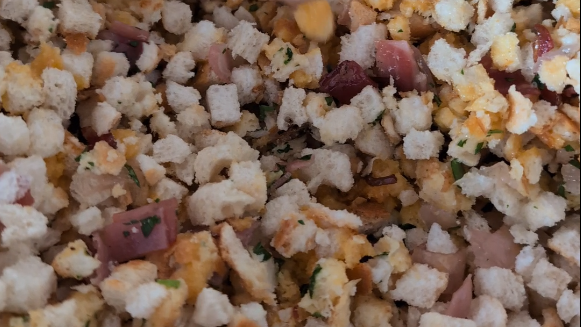
Of course, there are differences among dumplings—between soup dumplings and cheese dumplings, between liver and spinach dumplings, and many more. Yet in all their variety, they share one thing: they are all round. Then there are the regional differences—or rather “peculiarities”—which can vary from valley to valley. In the Upper Vinschgau, we take things a step further: here, dumplings have to be rouglig—slightly rough in texture—and they are not boiled in soup, but steamed. This is something we care deeply about, both here in the region and at the FinKa. We are quite particular about it, because for us it’s clear: a dumpling that is too smooth, and worse, bubbling away in broth, simply has no place in the Upper Vinschgau.
What’s more, at the FinKa we are purist traditionalists—only cheese and bacon dumplings make it onto our plates. That said, this traditionalism shouldn’t be taken too seriously. And what I’m about to admit doesn’t need to be broadcast too loudly: our “traditionalism” is also, quite simply, a matter of workload—or, depending on how you see it, our work ethic. We like to keep both within reasonable limits. Adding more varieties, like spinach or beetroot dumplings, would probably just overcomplicate things unnecessarily.
The Dumpling Recipe – Straight from the FinKa Kitchen
Right then—on to the recipe. It’s been requested long enough.
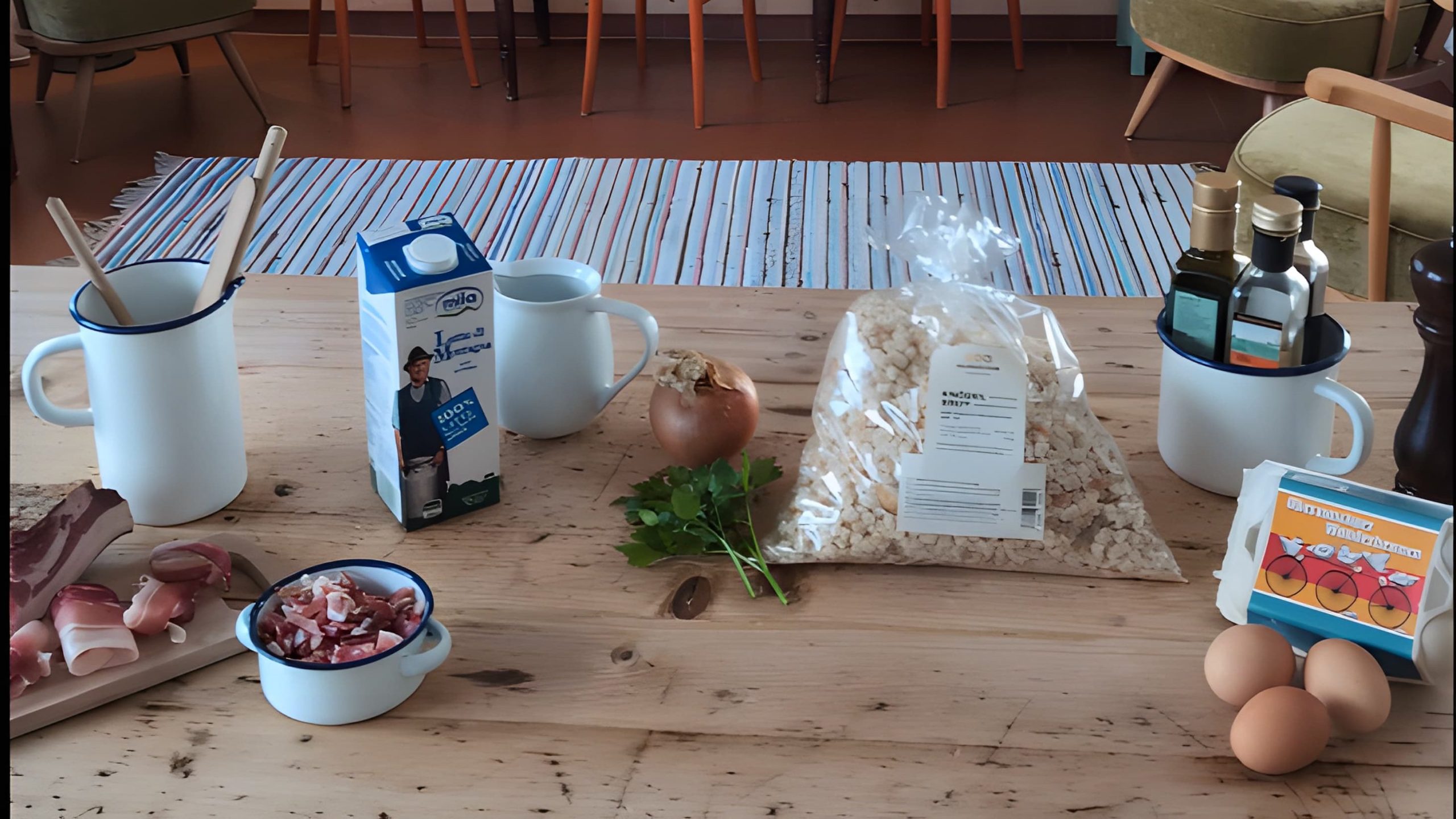
At the FinKa, we make two kinds of dumplings: bacon dumplings and cheese dumplings. The base is always the same: dumpling bread, eggs, chives, and a bit of milk. For cheese dumplings, you need a good cheese; for bacon dumplings, a good bacon. What matters is less the exact quantity than the right feel for it. Half a kilo of dumpling bread is a good benchmark. How many people it will feed depends less on the recipe than on appetite—and on how large you make the dumplings.
The dumpling bread goes into a large bowl. The chives are finely chopped and added—not too much, not too little. The same goes for the cheese or bacon, depending on which variation you’re preparing.
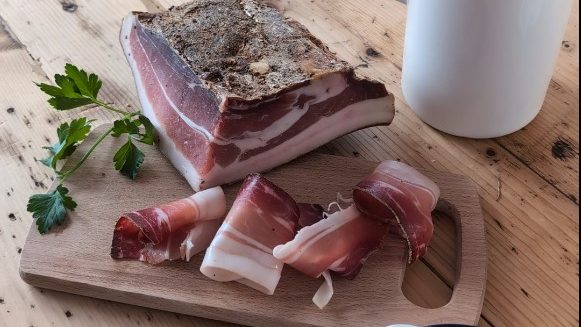
For the bacon dumplings, the bacon is lightly sautéed in butter and then mixed in. With the cheese, this step is skipped—it is added directly to the bread.
Then come the eggs—or, as they’re called here, the “Goggelen.” For half a kilo of dumpling bread, you’ll need about six to eight, depending on their size. Ideally from a local farm, with yolks that are still properly yellow. The eggs are whisked and added to the mixture. Then a splash of milk—but carefully. This is where everything is decided. If the mixture becomes too wet, the dumplings lose their character; if it stays too dry, they lack binding and structure. “A dumpling is like a person—if it’s too smooth, it lacks character.”
The right consistency is crucial: not too wet, not too dry. And if something does go wrong, there’s only one thing to do—adjust, or improvise.
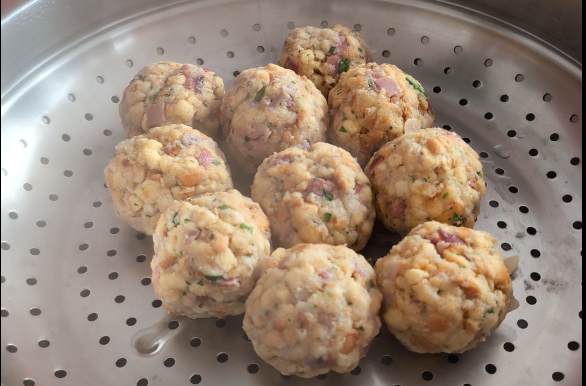
Once the mixture is right, it’s time to shape the dumplings. An Upper Vinschgau dumpling is round, but not perfectly smooth. It has edges—it’s rouglig, as we say here. The dumplings are shaped by hand, gently pressed, passed from one hand to the other, briefly rolled—and that’s it. From half a kilo, you’ll get about eight to ten dumplings.
They are not cooked in water, but steamed. Bring water to a simmer, place a steamer insert on top, and set the dumplings onto it. After about 15 to 20 minutes, they are ready.
Cheese dumplings are typically served with a bit of Parmesan and melted butter, topped with chives or a sprig of rosemary. Bacon dumplings, on the other hand, call for a side of cabbage salad—well seasoned with vinegar, oil, salt, pepper, and a hint of caraway.
Come by the FinKa—then you can try the dumplings for yourselves and see how close you’ve come.
📩 Reservation and room booking: info@finka.it 📞 Phone: +39 0473 427040 🌐 www.finka.it
References:
Hocheppan Castle Chapel – “The Dumpling Eater”
https://de.wikipedia.org/wiki/Burgkapelle_Hocheppan https://hocheppan.it/

Cyclists Welcome – FinKa is a Bett+Bike Hostel
Travelling along the Via Claudia Augusta: Why Mals has become the perfect stop between Reschen Pass and Merano for many cyclists.First you hear the quiet click of the gear shift, then a short sigh of relief – finally done. The bicycle is leaned against the wall of the...

Stelvio Pass Road – History, Giro d’Italia & Cycling from Mals
Long before the first cyclist climbs the pass in spring, the road usually still lies hidden beneath metres of snow. Hairpin after hairpin it rises from Gomagoi, climbs past Trafoi towards the Franzenshöhe and then winds its way through the high-alpine landscape up to...
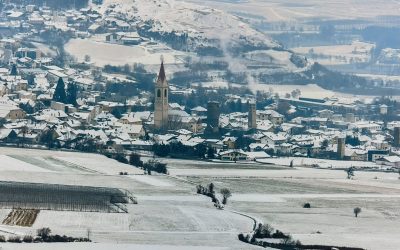
Winter. FinKa
Winter. FinKa “The snow hatches the landscape,” writes Lydija Tschukowskaja (Going Under, 1972). Here, the snow draws a softly falling curtain onto the wooden wall of the terraces and in front of the landscape. The view outward dissolves into the indistinct. The...
Want to be part of this story?
www.finka.it
